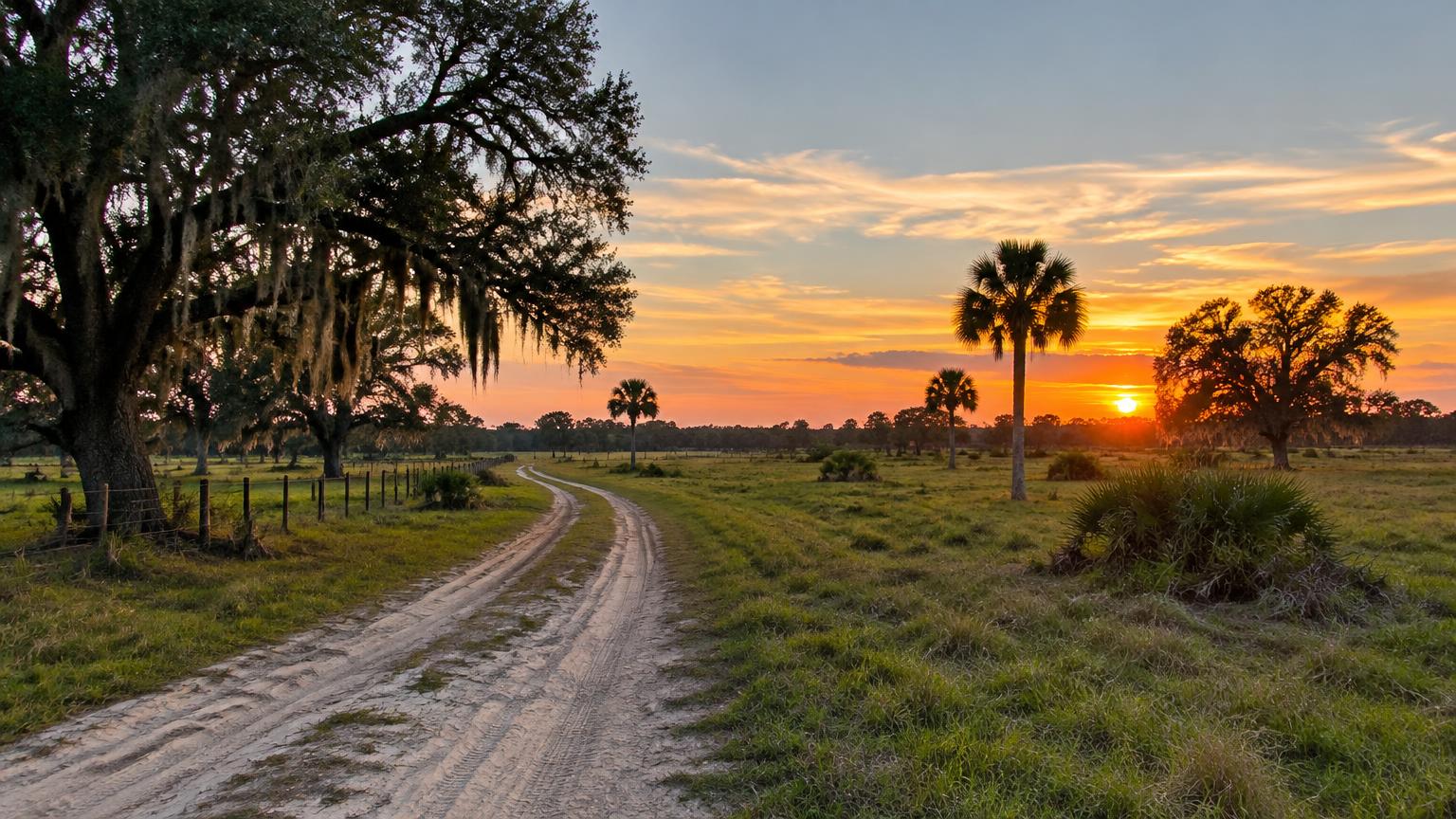
Walk the listings for vacant land around Lake Placid and you'll see "owner financing available" over and over. For a lot of buyers, it's the only realistic way to own land: banks rarely lend on cheap vacant lots, and few people have the full price in cash. Owner financing can be a great tool. It can also be an expensive one if you don't read the fine print. Here's how it actually works.
The basic idea
With owner financing — also called seller financing — the seller acts as the lender. Instead of getting a loan from a bank, you agree on a price, pay a down payment directly to the seller, and then make monthly payments to them with interest until the land is paid off.
There's usually no bank application, no appraisal and often no credit check. That's why it's so popular for Placid Lakes lots and small rural tracts across Highlands County.
Typical terms you'll see
Every deal is negotiated, but here's what's common around Lake Placid:
- Down payment: often small — sometimes a few hundred dollars to a few thousand on lower-priced lots, more on acreage.
- Interest rate: usually higher than a bank mortgage. That's the price of easy approval and the seller's risk.
- Term: commonly a few years up to about 10 years for lots, sometimes longer on larger parcels.
- Price: often somewhat higher than the cash price for the same land.
- Doc or servicing fees: some sellers charge a closing or document fee, and some use a loan servicing company that adds a monthly fee.
Always calculate the total you'll pay over the life of the deal — down payment plus all monthly payments plus fees. On a small lot, a high rate over a long term can nearly double what you pay.
How the deal is structured matters most
Deed with a note and mortgage
You receive the deed at closing, so you own the land. You sign a promissory note (your promise to pay) and a mortgage that gives the seller a lien on the land until it's paid off. Both get recorded with the Highlands County Clerk. If you default, the seller generally has to go through Florida's foreclosure process. For most buyers, this is the stronger, more protective structure.
Agreement for deed (contract for deed)
The seller keeps the deed until you make the final payment. You have the right to use the land, but you don't hold title yet. Florida law does give buyers under recorded agreements for deed certain protections, but the details depend on the contract. If the agreement isn't recorded, you're more exposed — for example, if the seller sells the land to someone else, takes out a loan against it, or passes away.
Whichever structure you use, insist that the paperwork is recorded and, ideally, that closing is handled by a title company or real estate attorney.
Owner financing vs. a bank land loan
Some local banks and credit unions do make land loans, usually with larger down payments, shorter terms and full underwriting. If you qualify, the interest rate may be lower and the total cost smaller. Owner financing wins on speed and flexibility. Our financing page compares both in more detail.
Questions to ask every seller
- What's the cash price, and what's the owner-financed price?
- What are the down payment, interest rate, term and monthly payment?
- What will I pay in total by the end?
- Do I get the deed now, or after the last payment?
- Will the note and mortgage — or the agreement for deed — be recorded?
- Who closes the deal? Is there a title search and title insurance?
- Is there a penalty for paying off early?
- Who pays the property taxes each year, and how is that tracked?
- What happens if a payment is late? Is there a grace period?
- Can I clear the land, place a home or build before it's paid off?
- Does the seller have a mortgage on the land themselves?
Protect yourself
- Do the same due diligence you'd do for a cash purchase — zoning, flood zone, access, septic. Our buying guide has the checklist.
- Get everything in writing. Verbal promises don't count.
- Keep records of every payment.
- Confirm property taxes are being paid each year on the Highlands County Tax Collector site.
- If anything feels rushed or vague, slow down and get a local attorney to look it over.
When owner financing makes sense
It's a good fit if you want to own land now, can handle a steady monthly payment, and don't want to — or can't — go through a bank. It's a less good fit if you can get a cheaper bank loan, or if the total cost is far above what similar lots sell for in cash.
We work with local sellers who offer fair, properly recorded owner-financing terms. Tell us your budget and the area you like, and we'll connect you.